
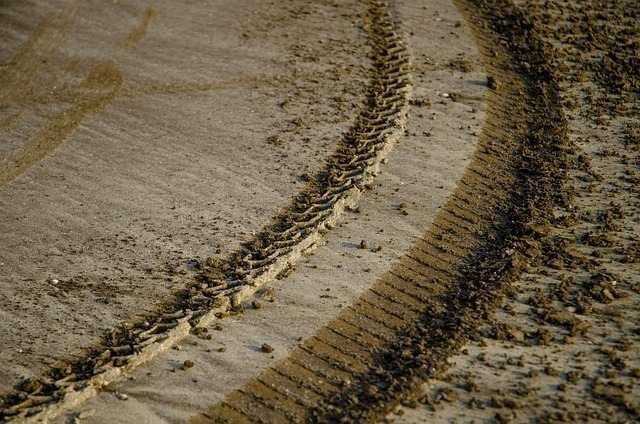
Concrete Foundations Adelaide nothing makes a brand-new driveway look older than it really is quite like tyre marks.
The concrete’s only been down a few weeks. It still looks crisp. Then someone reverses out of the garage on a warm afternoon and suddenly there are dark curved marks exactly where the wheels turn.
The first reaction is usually the same.
“Has something gone wrong with the concrete?”
Almost never.
After more than twenty years building driveways across Adelaide, I’ve found tyre marks are one of the most misunderstood parts of owning concrete. They’re incredibly common, especially on new driveways, and in most cases they’re more about how the driveway is used than how it was built.
Why do tyre marks appear?
Most people assume the tyres are leaving rubber behind because the concrete is rough.
The funny thing is, it’s usually the opposite.
As tyres heat up during driving, the rubber becomes softer. When you turn the steering wheel while the car is barely moving, the tyres twist against the surface instead of rolling naturally.
That twisting action leaves behind tiny particles of rubber.
Dark-coloured tyres on light-coloured concrete make those marks even more noticeable.
It doesn’t mean your driveway is damaged.
It simply means rubber met concrete.
New concrete shows everything
One thing we’ve noticed is that homeowners pay far more attention to a new driveway than an old one.
Every leaf.
Every footprint.
Every tyre mark.
Fresh concrete also tends to have a cleaner, lighter appearance, so dark marks stand out much more than they will a year or two down the track.
The good news?
Most tyre marks are only on the surface.
They’re not permanent damage.
Small driving habits make a difference
Here’s where people get caught out.
They turn the steering wheel while the car is sitting still.
That puts maximum friction between the tyre and the concrete.
Instead, try letting the vehicle roll slowly while turning.
It sounds like a tiny change.
Over time, it noticeably reduces the amount of rubber left on the driveway.
We’ve seen the difference on hundreds of residential driveways.
It’s one of the easiest habits to change.
A sealed driveway is easier to clean
Tyre marks can’t always be avoided.
Even the best concrete will collect a few over the years.
What sealing does is make those marks much easier to remove before they become part of the driveway’s everyday appearance.
A quality sealer creates a protective barrier that stops rubber and dirt from gripping the surface as aggressively.
That’s especially worthwhile if you’ve invested in coloured concrete or exposed aggregate.
The goal isn’t preventing every mark.
It’s making maintenance simpler.
Don’t reach for harsh chemicals
The temptation is understandable.
You see black marks and immediately want the strongest cleaner available.
We’ve seen people try everything from bleach to paint thinners.
Usually, they create more problems than they solve.
Most tyre marks come away with a concrete-safe cleaner, warm water and a bit of patience.
Aggressive chemicals or excessive pressure washing can affect the finish long before the tyre marks disappear.
A few simple ways to keep your driveway looking better
Good maintenance is surprisingly straightforward:
- Avoid turning the steering wheel while the vehicle is stationary.
- Clean tyre marks before they build up.
- Keep decorative concrete sealed where recommended.
- Wash the driveway regularly to prevent dirt and rubber from accumulating.
- Use cleaners designed specifically for concrete finishes.
None of those take much effort.
Together, they help preserve the appearance of the driveway for years.
After building hundreds of driveways across Adelaide, I’ve learned that tyre marks are simply part of everyday life. Every driveway that gets used will collect them eventually. The difference is how quickly they’re cleaned and how well the surface has been protected from the start.
At Pro Concreting Adelaide, we design driveways to handle real family life—not just look good on the day they’re poured. If you’re planning a new concrete driveway or want advice on keeping your existing one looking its best, we’re always happy to share practical guidance and provide a straightforward, no-obligation quote.